
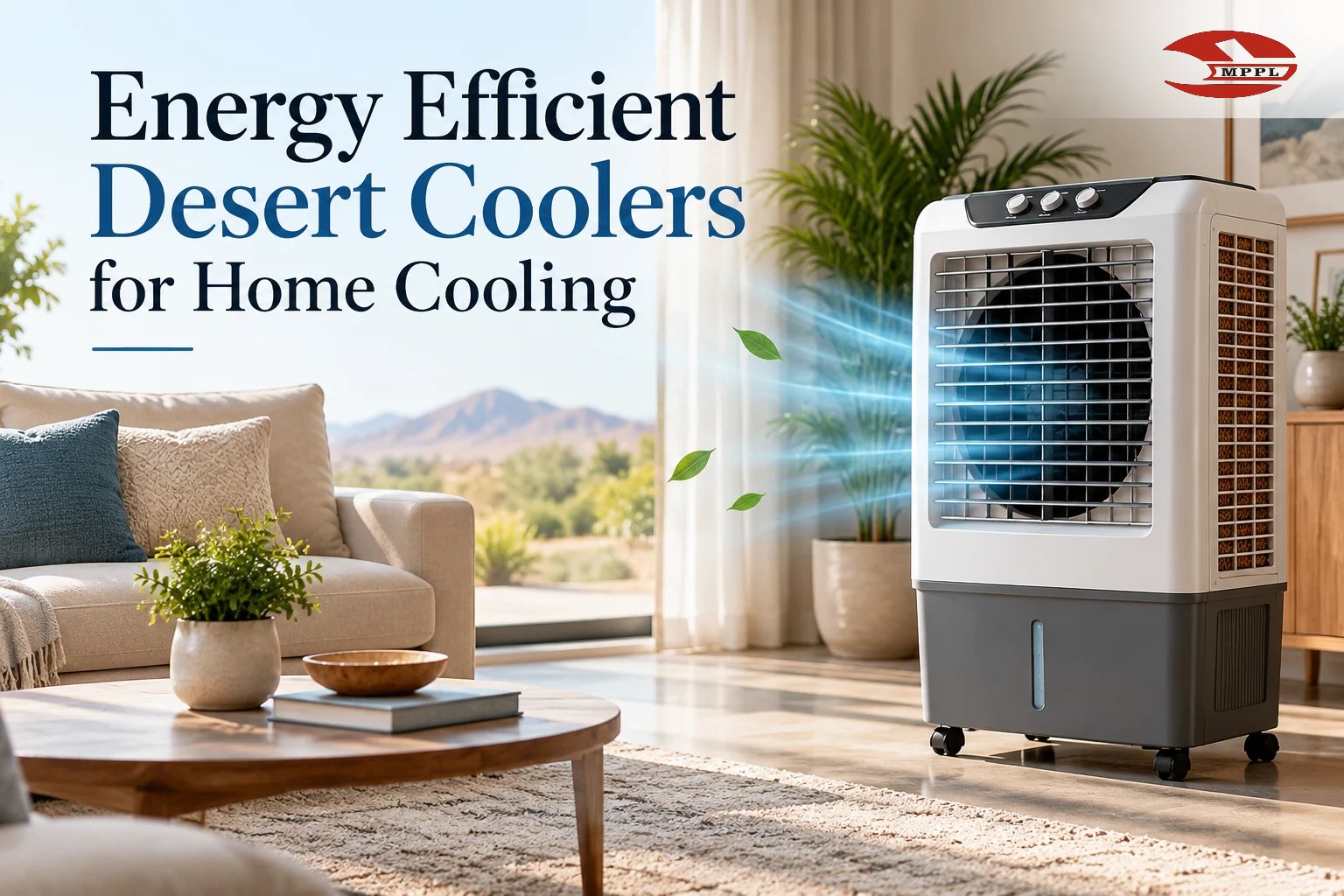
Energy Efficient Desert Coolers for Home Cooling
Summer electricity bills have a way of sneaking up on you. Run an air conditioner through a long, hot season and you feel it the moment the bill arrives. That’s exactly why so many people are turning back to a simpler idea: an energy efficient desert cooler for home use, one that cools a large room without the running costs an AC brings with it. But energy efficiency is not just a label on a box but it comes down to how the cooler is actually built. Here’s what that means and how to think about it before you buy.
What Is a Desert Cooler for Home Use?
A desert cooler works through evaporative cooling – water moves through cooling pads, a fall pulls warm air through those wet pads and the evaporation process pulls heat out of the air on its way through. So, what comes out the other side is cooler, fresher air, pushed into the room by the blower.
Compared to a compact personal cooler, a desert cooler for home use is made bigger throughout – meaning larger tank, stronger fan and wider surface. It can comfortably cool large rooms, living areas or even a whole floor mainly in hot, dry conditions where evaporation does its job well.
What Actually Makes a Desert Cooler Energy Efficient?
Efficiency here is not about running a cooler for hours just to save money but it’s also about the design.
Lower wattage motors: A well-designed cooler can move a serious amount of air without drawing a lot of power. A unit rated around 190W, for instance, uses a fraction of what an AC compressor typically pulls, which adds up fast over a full summer.
Inverter compatibility: Coolers built to run on standard home inverters are a genuine plus during power cuts, keeping the room comfortable without needing a separate backup plan.
Well-designed cooling pads: Honeycomb-style pads use water perfectly, so basically the cooler doesn’t have to put extra effort to get the same cooling effect.
Smart airflow control: Multiple fan speeds let you dial back power use on milder days instead of running everything at full blast out of habit.
Where a Desert Cooler for Home Fits Best
As per the size and airflow involved, a desert cooler for home use tends to work best in larger bedrooms, living rooms and halls – anywhere a personal cooler would struggle to keep up. It’s worth remembering that evaporative cooling needs some fresh air moving through the room, so a fully sealed space won’t get the same results.
Things to Check Before You Buy
- Power rating: lower wattage generally means lower running costs over a full season
- Tank size: bigger means fewer refills during peak summer days
- Inverter compatibility: genuinely useful if your area sees frequent power cuts
- Pad quality: honeycomb-style pads tend to cool more consistently
- Room size: match the cooler’s output to the space, not the other way around
MPPL: Manufacturing Desert Coolers Built for the Home
Many of the desert coolers found in Indian homes are manufactured by partners working behind well-known brand names and MPPL is one of them. As an OEM and ODM manufacturer, MPPL develops and manufactures air coolers for established names including Crompton, Usha, Bajaj and many more.
What makes this possible is MPPL’s backward-integrated setup – design, tooling, injection moulding, component manufacturing, and assembly all handled across its own facilities, under ISO-certified quality systems. For the brands it partners with, that means dependable quality and the ability to scale production without relying on a long chain of vendors.
Conclusion
An energy efficient desert cooler for home use comes down to smart engineering – the right motor, the right pads, and thoughtful airflow control working together. With real manufacturing experience behind established cooling brands, MPPL brings exactly that kind of engineering to the desert coolers built for Indian homes.